CV

Here's what I've done so far

Education

M.S.E. in Biomedical Engineering: Imaging and Instrumentation - Johns Hopkins University

2019 - 2020

Relevant coursework: Robot Devices, Kinematics, Design, and Control; Haptic Design; Mechatronics; Biomedical Instrumentation; Surgery for Engineers

I was very fortunate to participate in a 3+1 program where I was able to take graduate level courses and complete my masters instead of graduating early.


B.S. in Biomedical Engineering - Johns Hopkins University

2016 - 2020

Relevant coursework: Control Systems; Robot Sensors/Actuators; Circuits; Build an Imager; Biomedical Data Science; Rehabilitation Engineering

Activities: Treasurer-Theta Tau Professional Engineering Fraternity, Hopkins Emergency Response Unit, BME Design Teams

Experience

Mechatronics Engineer - Laza Medical

Oct 2024 - Present | Campbell, CA

    I've been working on the mechatronic design of a robotic platform that can control an ultrasound probe used in heart procedures


Robotics Engineer - Cellular Vehicles

Oct 2023 - Oct 2024 | Palo Alto, CA
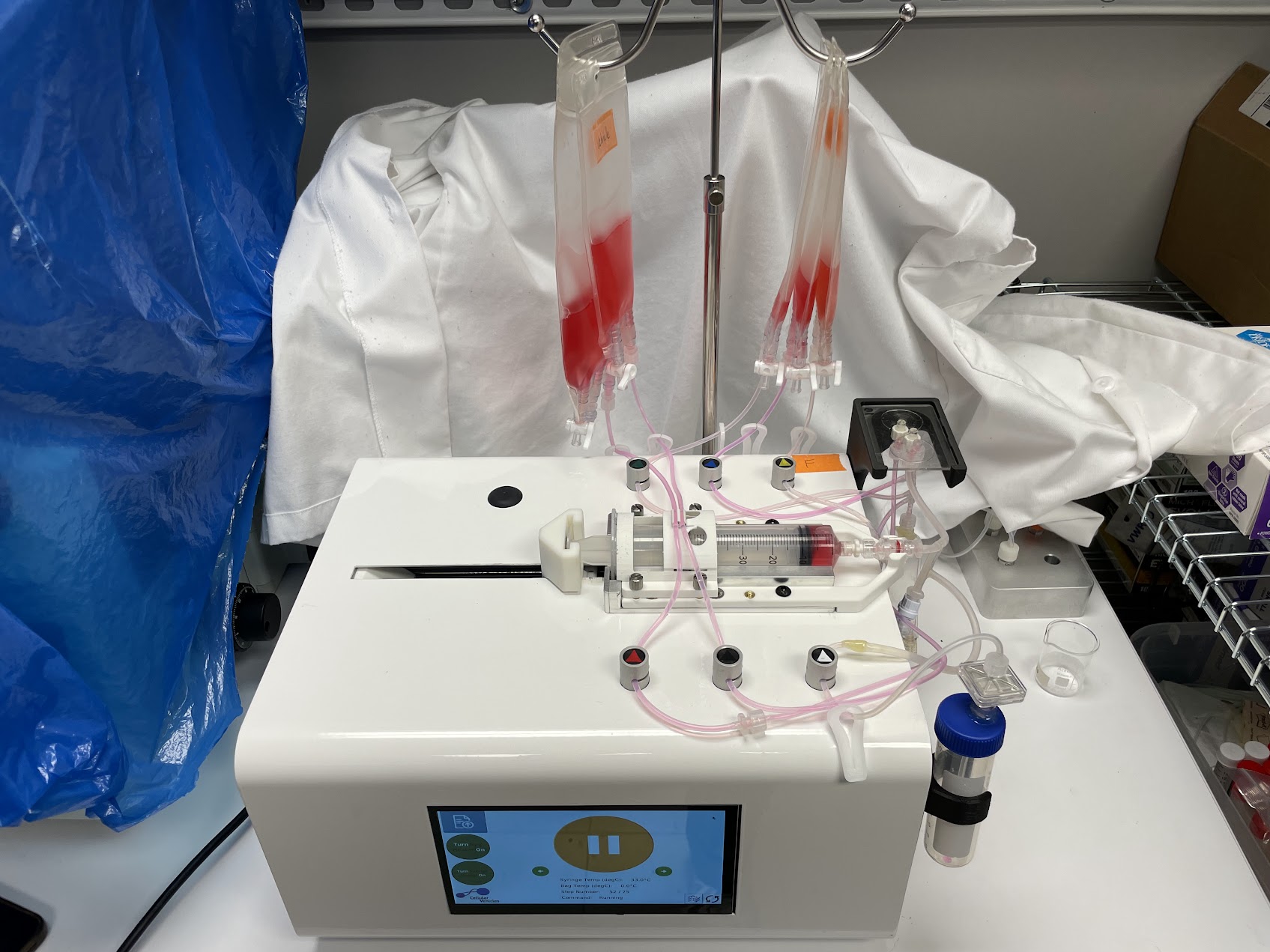
    During my time at Cellular Vehicles, I led the mechatronic and software development of the Odyssey system, a robot that conducts the "last mile" step of preparing cell therapies for patient administration. I designed the PCBs in Fusion 360 for sensor readings, actuator control, and heater control for the thawing modules. I also worked with the suppliers to have the PCBAs assembled. I also wrote the firmware that controlled the sensors and actuators in C and C++ based off of G-code commands. I even wrote a python GUI that would send out the specific instructions for each different cell therapy that also would save logs that could be used for remote debugging.

    Using Solidworks, I designed some parts of the robot and worked on machining them. I actually built the first iterations of the Odyssey that we sent for pilot testing.

    I also worked on the development of a microfluidic chip that allowed the robot to safely separate the cells from the waste liquid and also concentrate them.


Systems Integration Engineer - Johnson and Johnson

Mar 2022 - May 2023 | Santa Clara, CA
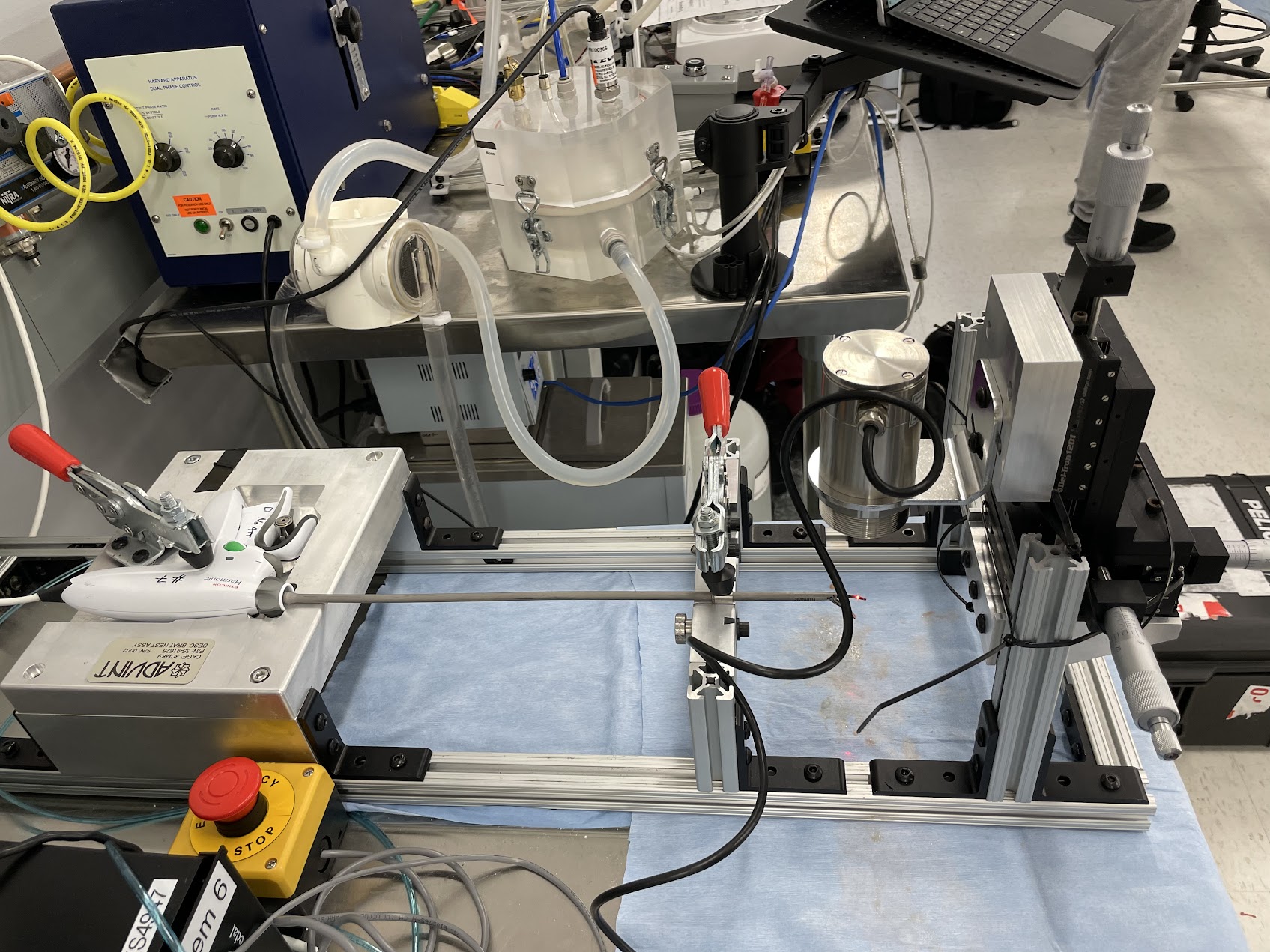
    At J&J I was a part of the Robotics and Digital Solutions group. My team was working on digital solutions to help with robotic and manual surgery. The first main project was the digital hub, a computer that could add a sort of HUD over a surgeon's laparoscopic feed feed and give them useful information. I worked on the hardware and a little on the manufacturing side side of the project, working on building the first few production systems and also helping diagnose any issues with the builds.

    The other project that I mainly worked on was the development of an algorithm that determines the temperature of an ultrasonic blade. I was able to make two algorithms, one that can determine the temperature of the tool using the resonant frequency of the tool and another that can determine what media the tool is in (air, liquid, or tissue) that also helped determine the cooling profile. These algorithms were developed in MATLAB and Python and I also made a framework that allowed us to pull the lab collected temperature data from an SQL database, run the different algorithms, and compare the results against each other.


R&D Mechatronics Engineer - Army Research Laboratory

Sep 2020 - Mar 2022 | Aberdeen Proving Ground, MD
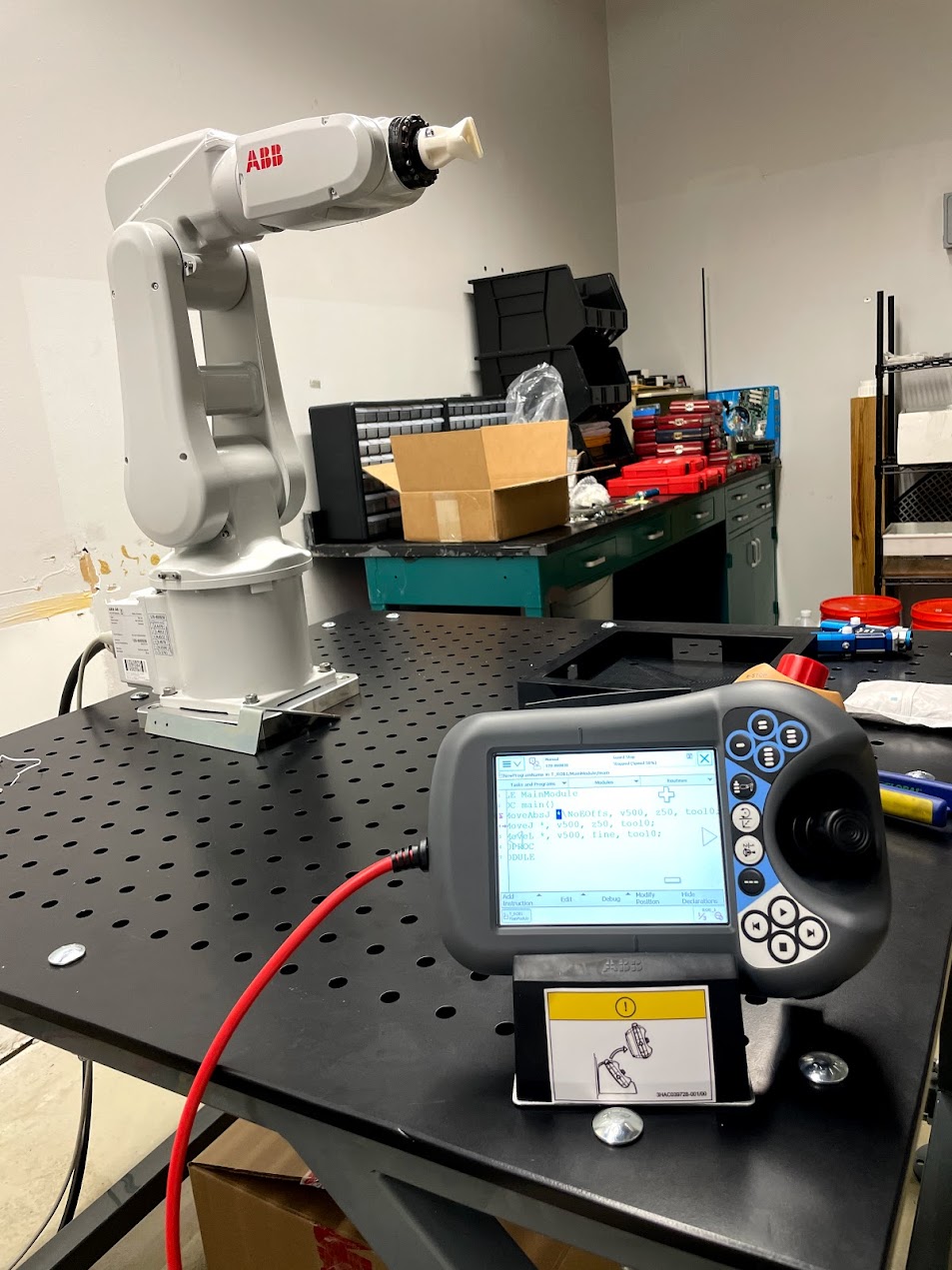
    My first job out of school was at the ARL, specifically the Advanced Manufacturing team. My main project was working on 3 dimensional PCBs that could be added onto munitions to get trajectory information. My secondary project, which ended up taking much more of my time was on developing a 6-axis robot arm 3D printer that could use the special print-heads designed by the teams to help manufacture or even repair parts such as armor in the field for the army. I even wrote a review paper on the use of multi-robot additive manufacturing.


Graduate Student Researcher - Terradynamics, Laboratory for Computational Sensing and Robotics

May 2019 - Sep 2020 | Baltimore, MD
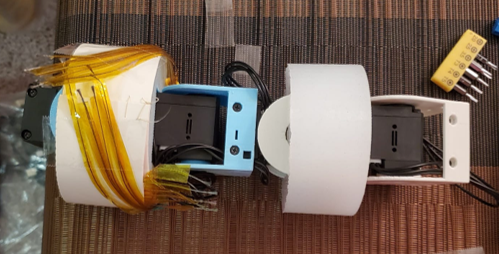
    While I was in the graduate part of my 3+1 program at JHU, I worked in the Terradynamics lab, advised by Dr. Chen Li. The lab's goal was to learn how animals move and translate that to robotics. We had many robots that were based on animals like snakes, lizards, and even cockroaches. My research was mainly on the snake robots.

    I worked on developing a low-cost pressure mapping sensor that could act as a skin for the snake robot so that the robot could know more about the terrain that it was on. I even worked on redesigning parts of the robot in Solidworks to help with adding skin onto it. I also worked on a Python/Matlab code that allowed for us to visualize the data coming from the sensor in real-time.


Emergency Medical Technician - Johns Hopkins Emergency Response Organization

Nov 2017 - Dec 2019 | Baltimore, MD
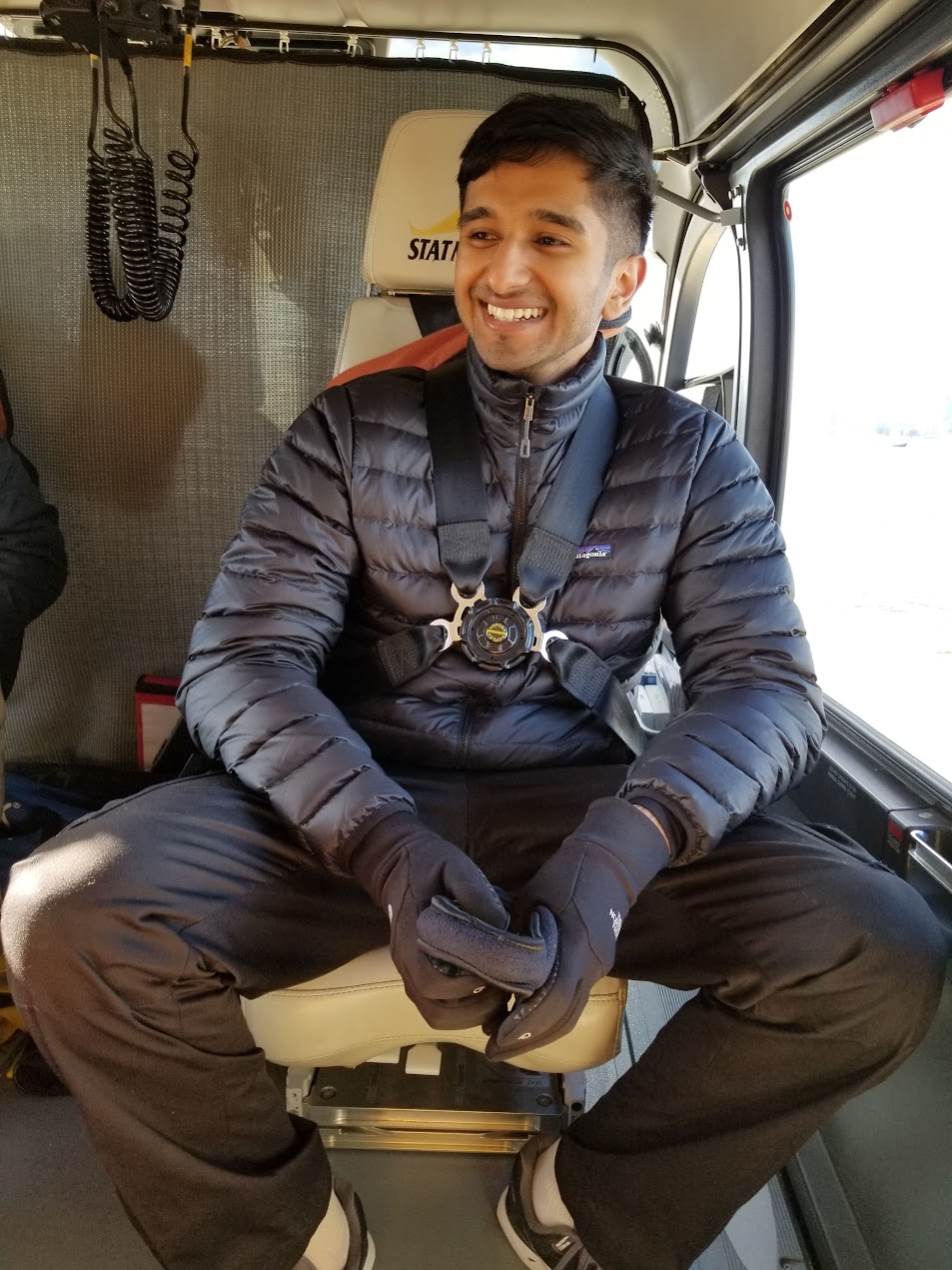
    I joined HERO my sophomore year of college. I trained and got my Nationally Registered EMT license in February 2018 and from then on, ran shifts as an EMT on campus. We would act as the first responders to emergencies on and around the campus and would provide basic life support until paramedics would arrive. I also got to do ride alongs with Baltimore paramedics and even ran a couple of Stop the Bleed courses at local schools!


Design Studio Teaching Assistant - Johns Hopkins Department of Biomedical Engineering

Sep 2018 - May 2019 | Baltimore, MD

    I took a part time job as a teaching assistant for the BME Design Lab, a sort of maker space for BME students to work on any project they wanted. We had everything a maker could need: a basic machine shop, 3D printers, soldering stations and electrical test tools, sewing machines and everything in between. I worked on teaching students how to use the different tools and machines and would help upkeep the machines as well.


Co-Founder, Engineering Lead - Osteocast

Mar 2017 - May 2019 | Baltimore, MD
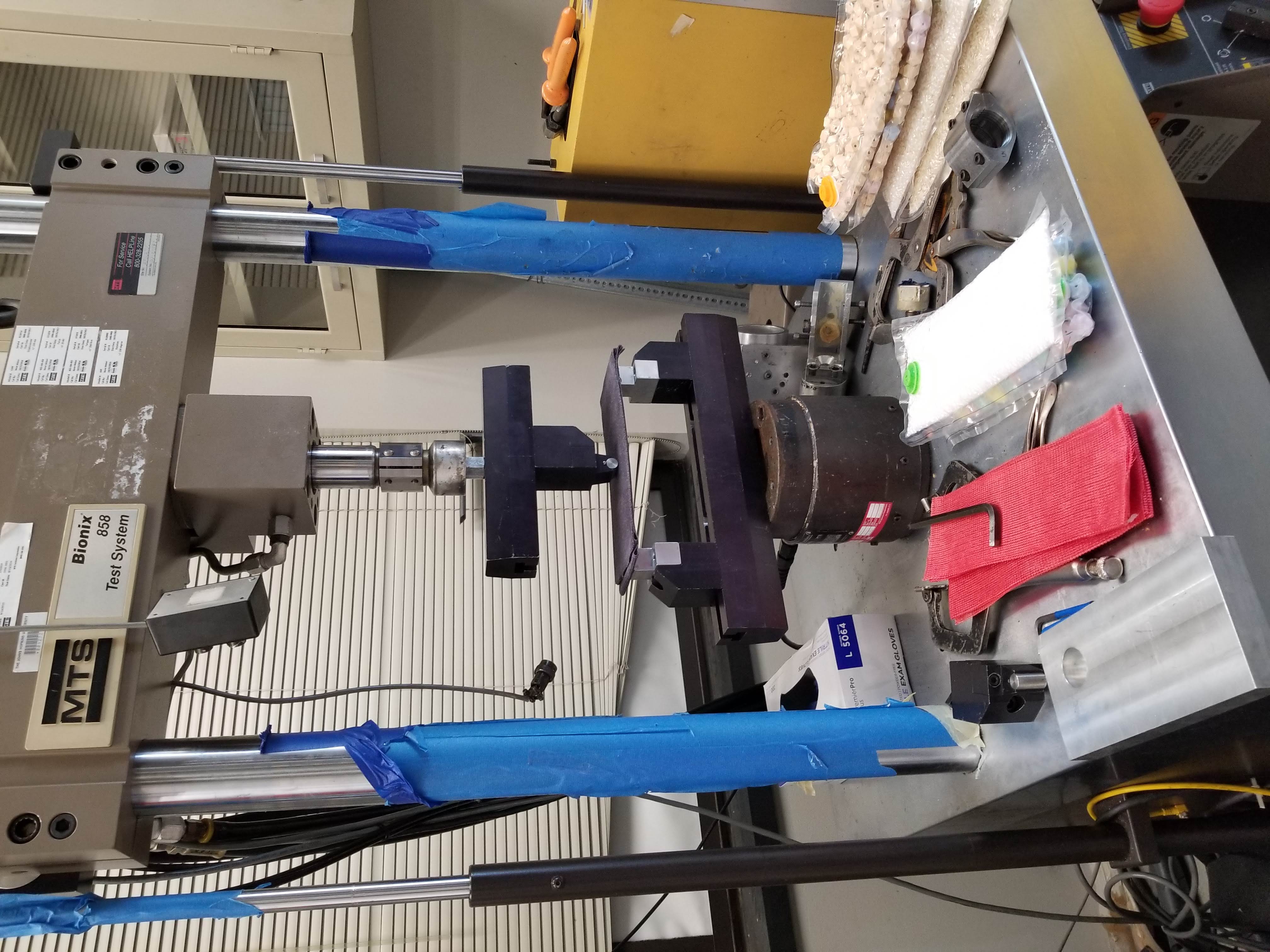
    I joined the BME Design Teams program where teams would work to help solve needs that doctors at Johns Hopkins Hospital would bring to us. My team chose the project of making a better version of a cast for forearm fractures. We worked on making a waterproof and remoldable cast that would make life easier for the wearers and other key stakeholders by allowing for easier administration and repair while also being cheaper. I helped come up with the design and started the V&V testing of the cast. We even maintained design history files in preparation for FDA submission.


Algorithms Engineering Intern - Universidad Carlos III de Madrid

May 2017 - Aug 2017 | Madrid, Spain

    I did a summer internship with the Biomedical Imaging and Instrumentation Group at the Universidad Carlos III de Madrid as a part of a research abroad program. My work was in developing an image processing algorithm in MATLAB that would improve the CT scans of animals by about 46%. This was done by removing the frames where the animal was breathing from the overall volume of images because they would end up blurring those areas.

Skills

Software

  • Python
  • C/C++
  • MATLAB
  • Git, Linux
  • Java

Robotics

  • Robot Arms, Robot Kinematics
  • Control Systems
  • Haptics
  • Teleoperation
  • Simulation

Mechatronics

  • PCB & Circuit Design (Fusion 360, KiCAD)
  • Hardware Design
  • Microcontrollers/Raspberry Pi
  • Sensors/Actuators
  • Oscilloscopes
  • EtherCAT, SPI, I2C

General

  • CAD (SolidWorks, Onshape)
  • 3D Printing
  • Rapid Prototyping
  • Machining
  • Laser Cutter, Water Cutter
  • Systems Integration
  • GD&T

Patents

Microfluidic systems, devices, and kits for suspension therapy preparation and/or infusion and methods for use

Patent No. WO2025213101A1 | 2025 (Pending)

A microfluidic device for processing therapeutic suspensions (such as CAR T-cell therapies) using microfluidic inertial focusing to separate, wash, and concentrate therapeutic agents from waste media prior to patient infusion.


Method and system for estimating temperature of an end effector of an ultrasonic instrument

Patent No. XXXXXXX | 2024 (Pending)

A surgical system that estimates the temperature of an ultrasonic surgical blade in real-time using resonance frequency measurements and temperature models during both heating and cooling cycles.